Moodle LMS Integration Services That Actually Connect Your Business

Does your Moodle LMS talk to the rest of your business, or does it sit off to the side while someone on your team manually copies data between systems?

If it’s the second one, you’re not alone. It’s one of the most common problems we see, and it’s usually not because anyone did anything wrong — it’s just what happens when an LMS gets set up on its own, without anyone thinking through how it should connect to everything else.

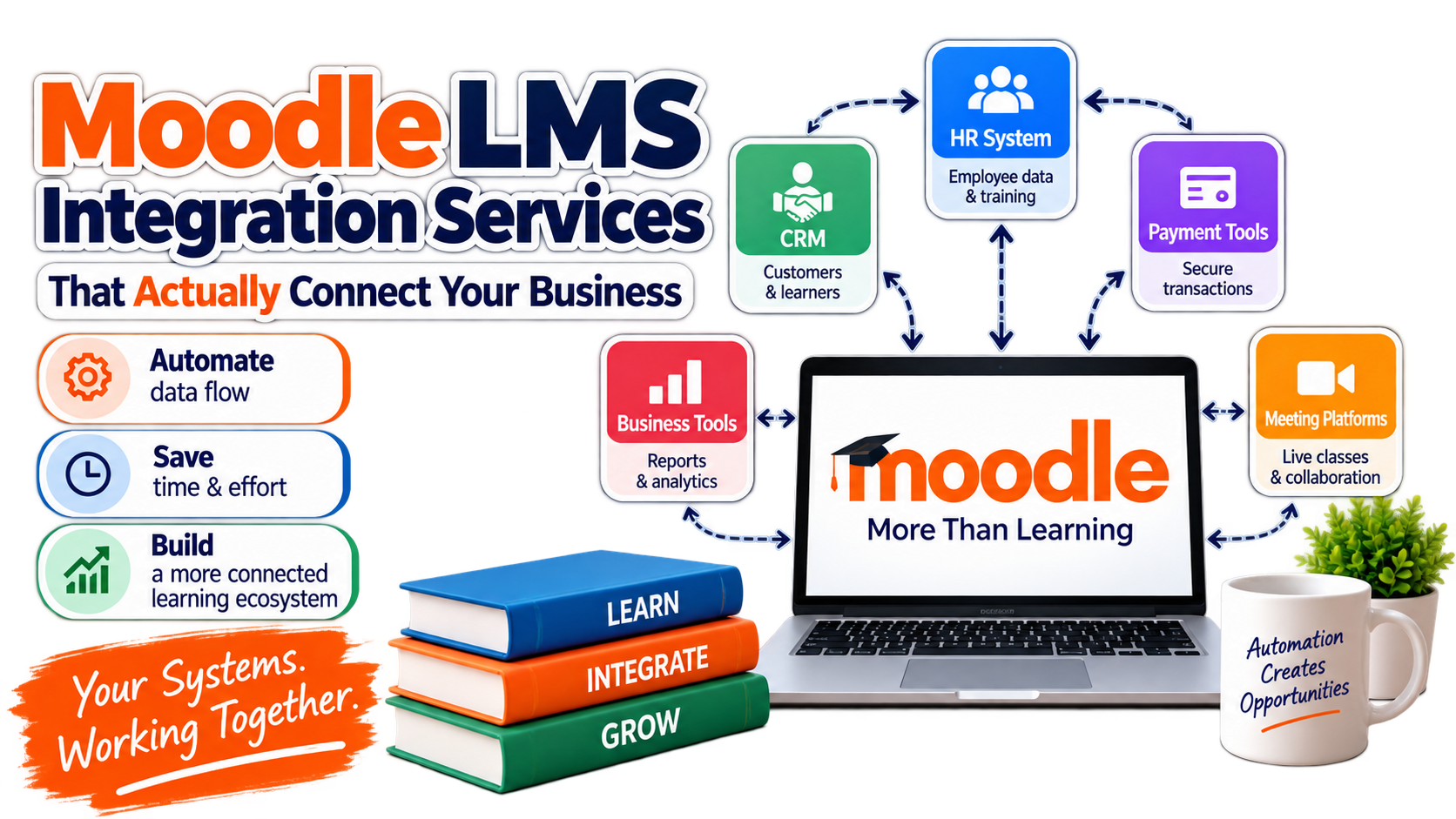
That’s the part we help with. We’re a team that works specifically on Moodle LMS integration services — connecting Moodle to the CRM, HR system, payment tools, and meeting platforms your business already runs on, so information moves on its own instead of relying on someone’s memory and a spreadsheet.

LMS INTEGRATION

What LMS Integration Actually Means

Let's keep this simple, because a lot of explanations of "LMS integration" make it sound more complicated than it is.

It means your Learning Management System and your other business tools — CRM, HR software, ERP, payment processor, whatever you rely on — share information automatically instead of someone re-entering it in each system.

↔
One connected ecosystem

Your LMS and business systems exchange the information they need without constant manual updates.

When Integration Is Missing you probably recognize a few of these:

01

Duplicate Data Entry

Someone on your team enters the same learner information twice, once in the LMS and once somewhere else.

02

Out-of-Sync Records

HR and the LMS have slightly different records because nothing keeps them in sync.

03

Delayed Course Access

A learner pays for a course but doesn't get access right away because that step isn't automatic.

04

Trapped Completion Data

Completion data sits in Moodle and never reaches the people who actually need it — HR, compliance, sales.

✓

Integration Removes the Friction

None of that is a big dramatic failure. It's just friction, repeated every day. Integration is what removes it.

Why We Focus on Moodle, Specifically

Moodle is enormously popular, and also genuinely flexible — you can configure and extend it in a lot of directions. That's a strength, but it's also exactly why integrations built by people who don't know Moodle deeply tend to break down: a plugin update rolls out, an API call that used to work stops working, and suddenly something that was fine is not fine anymore.

We don't split our attention across five different LMS platforms. Moodle is what we work in, which means we're not learning it on your project — we already know where the friction points usually are.

What this looks like in practice:

01

Custom integrations built with Moodle's plugin and API framework

02

LTI setup, so third-party tools can open securely inside Moodle without a separate login

03

Single Sign-On, so people log in once instead of juggling passwords across systems

04

Two-way syncing, so updates flow both directions instead of only one

05

Integrations built to survive Moodle version upgrades, not just work until the next one

06

Performance testing, because an integration that slows down your LMS isn't actually helping anyone

What We Actually Connect Moodle To

Rather than speak in general terms, here's what this looks like for the systems you're probably already using.

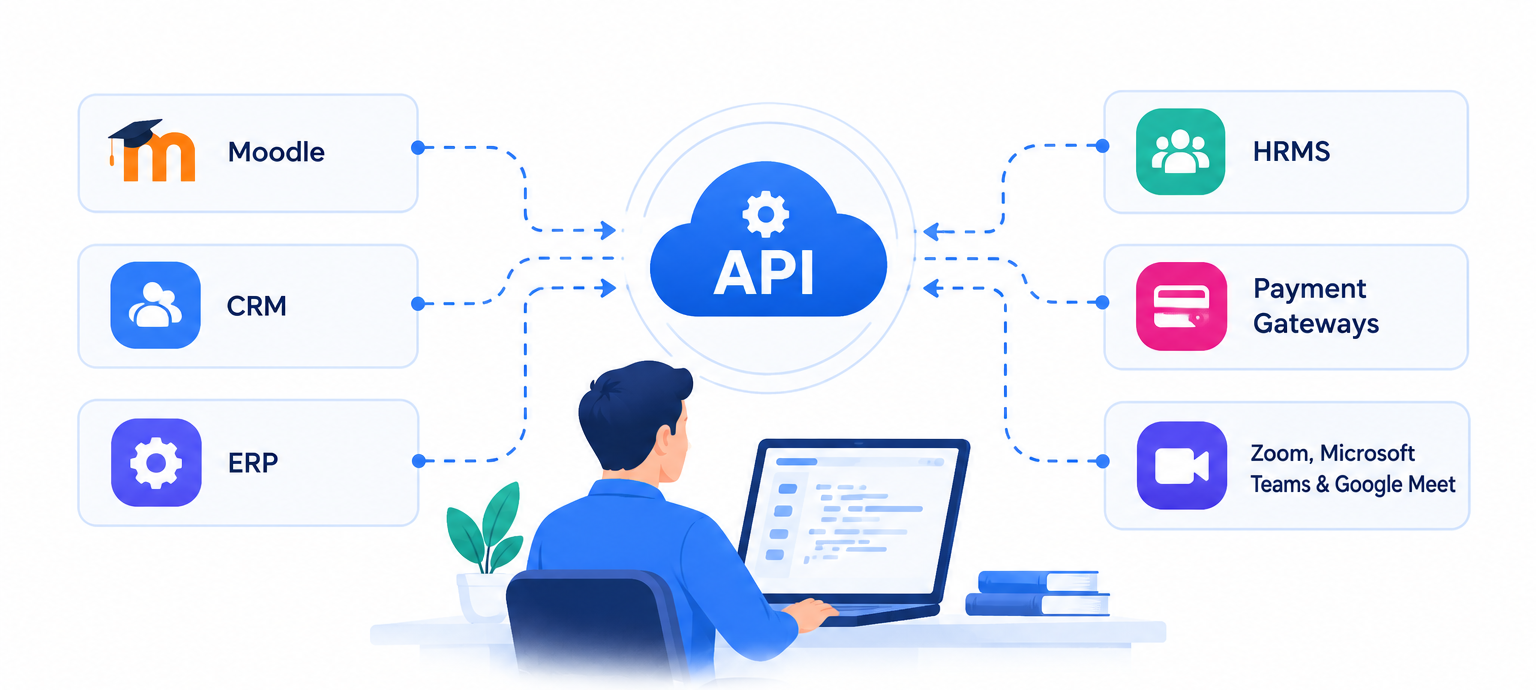
CRM

CRM

If you use Salesforce, HubSpot, Zoho, or something similar, we connect it to Moodle so that when someone enrolls or finishes a course, your sales or customer success team sees it — without anyone exporting a spreadsheet to make that happen.

ERP

ERP

For businesses running SAP, Oracle, or Microsoft Dynamics, we make sure training and compliance data lines up with the rest of your operational systems, instead of living in its own separate world.

HRMS

HRMS

Connect Moodle to Workday, BambooHR, ADP, or your HR platform of choice, and role changes or new hires can trigger the right training automatically — no one has to remember to set that up manually.

Payment Gateways

Payment Gateways

Selling courses or certifications? We connect Moodle to Stripe, PayPal, Razorpay, or your processor of choice, so payment and access happen in one step, securely, without friction for the learner.

Zoom, Microsoft Teams & Google Meet

Zoom, Microsoft Teams & Google Meet

Live sessions and webinars can be scheduled, joined, and tracked directly from Moodle, with attendance and recordings syncing back automatically — no separate calendar juggling or manual attendance sheets.

Anything Else With an API

Anything Else With an API

If there's a tool your team relies on that isn't listed here, tell us about it. If it has an API — and most modern tools do — there's a good chance we can connect it. We'll tell you honestly if something isn't feasible, rather than promise it and figure it out later.

How We Actually Work Through a Project

We keep this straightforward on purpose, because integration projects tend to go wrong when the process is vague, not when the technical work is hard.

01

We start by listening.

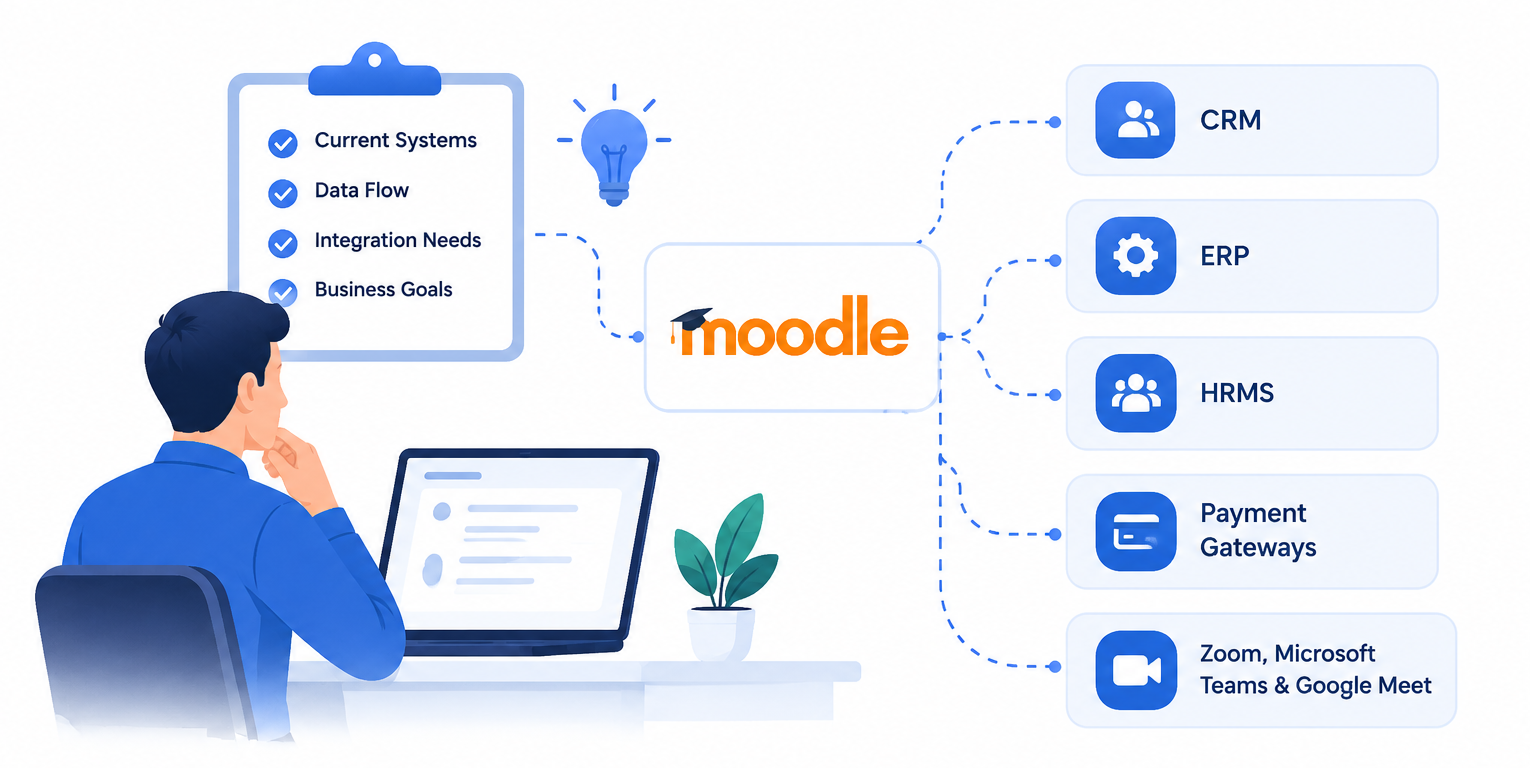
Before anything gets built, we want to understand what systems you're using, what's actually causing friction, and what a good outcome looks like from your side — not just ours.

02

Then we plan the approach.

API, LTI, or a custom connector — the choice depends on what will hold up over time, not what's quickest to ship.

03

We build it away from your live site.

Everything gets developed and tested in a separate environment first. Your working Moodle instance is never where we experiment.

04

We test it properly.

That means checking data in both directions, deliberately trying to break it, and looking for the edge cases that don't show up until real users hit them.

05

We launch carefully.

With a way to roll things back if something unexpected comes up, and close attention paid in the days right after.

06

And then we stay around.

Moodle updates. The tools you connect it to update their APIs too. Integration isn't a one-time task — it needs occasional attention to keep working, and we don't disappear once it's live.

Automation We Handle Through Moodle Integration

[Placeholder — confirm what "IQ" refers to before publishing: product name, internal framework, or something else. Once confirmed, this section can be framed around it directly, e.g. "Through our IQ consolidation approach, we handle..."]

Through our integration techniques and methodology in Moodle, we handle automation across:

Enrollment automation

Enrollment automation

Reporting automation

Reporting automation

Notification automation

Notification automation

Certification automation

Certification automation

User management automation

User management automation

And the integrations themselves are built with these standards in mind:

✓

Securely integrated API services

✓

Real-time data synchronization

✓

Scalable, optimized performance under the hood

✓

Compatible with all Moodle updates

✓

Full testing and deployment support

INTEGRATION WORKFLOW

Our Integration Process

We keep this straightforward on purpose, because integration projects tend to go wrong when the process is vague, not when the technical work is hard.

Requirement Analysis
01

Requirement Analysis

Before anything gets built, we look at your existing systems and understand exactly what needs to connect, and why.

↗
API Integration Strategy
02

API Integration Strategy

We map out how the integration will actually work — which APIs are involved, how data should flow between systems like your CRM or ERP, and what approach will hold up over time.
↗
Secure Development
03

Secure Development

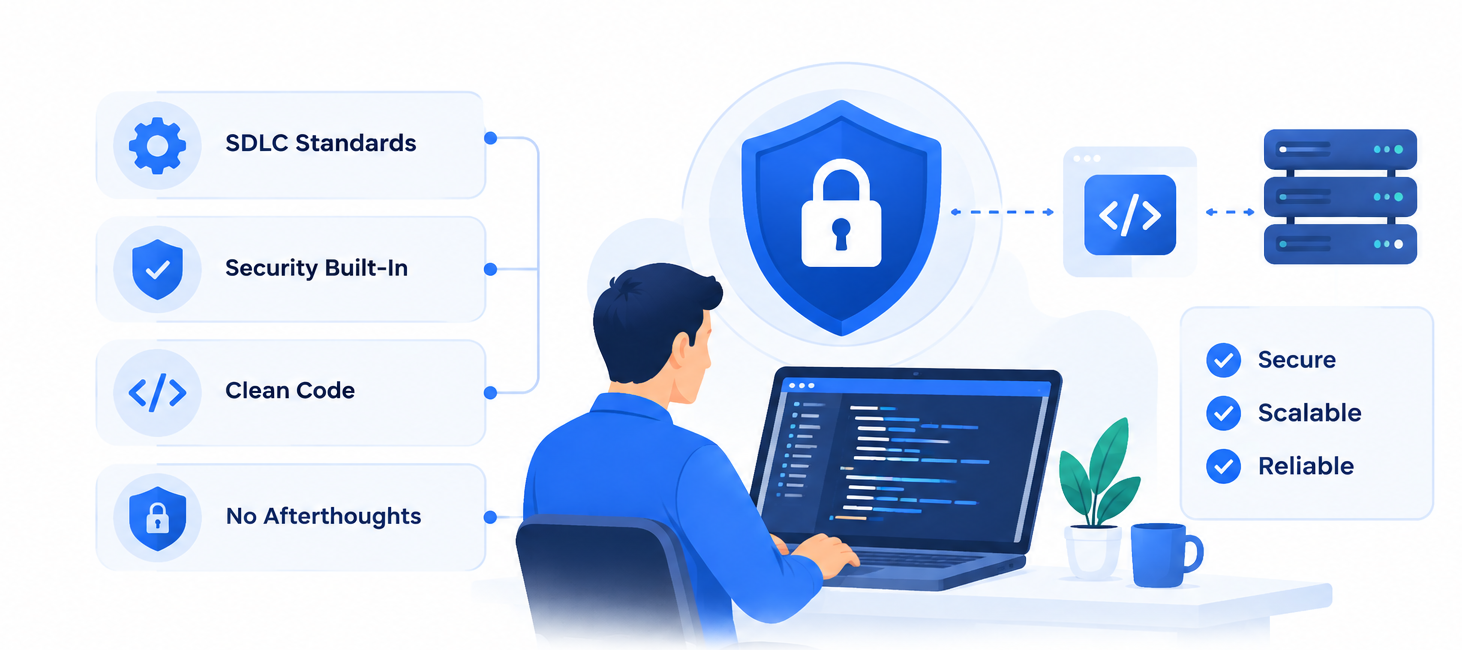
We build the integration following SDLC (Software Development Life Cycle) standards, with security built in from the start rather than added afterward.
↗
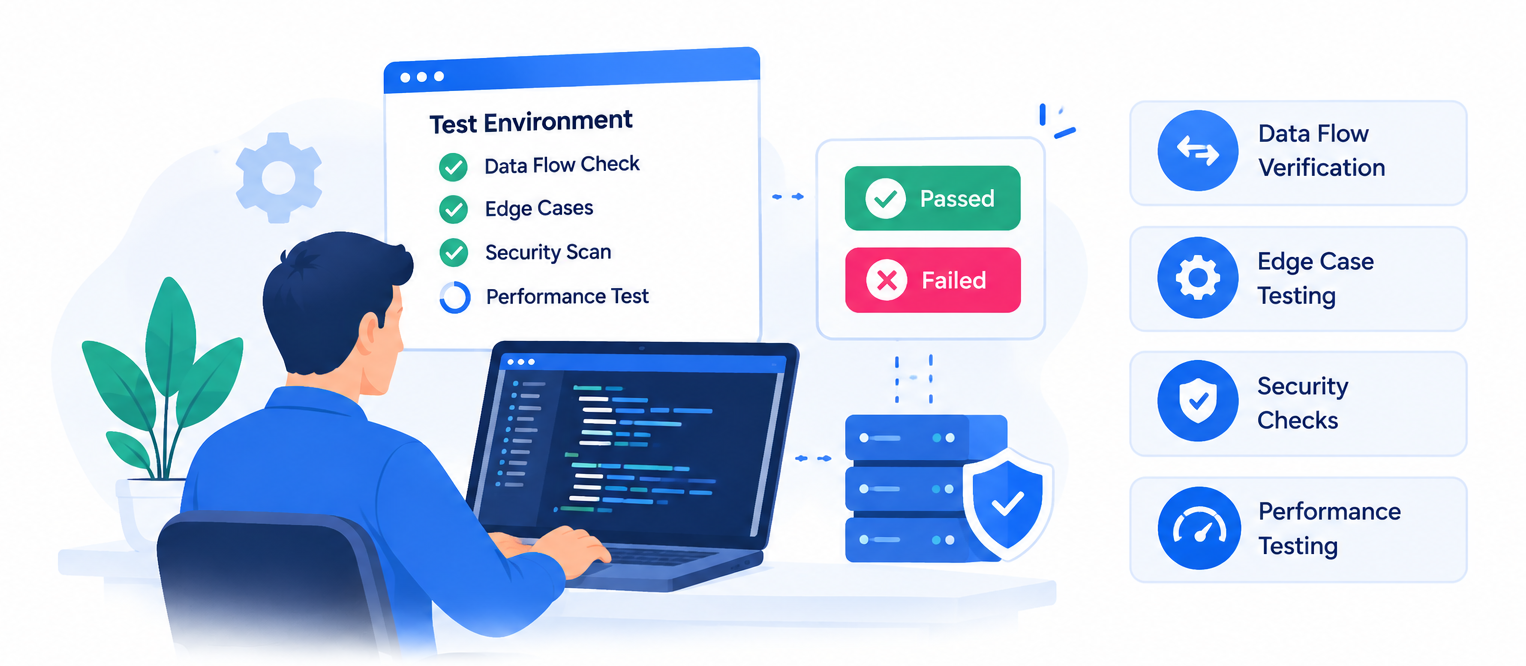
Testing and Validation
04

Testing & Validation

Everything is tested on a staging environment first — never on your live Moodle site — checking data flow, edge cases, and anything that could break before it reaches production.
↗
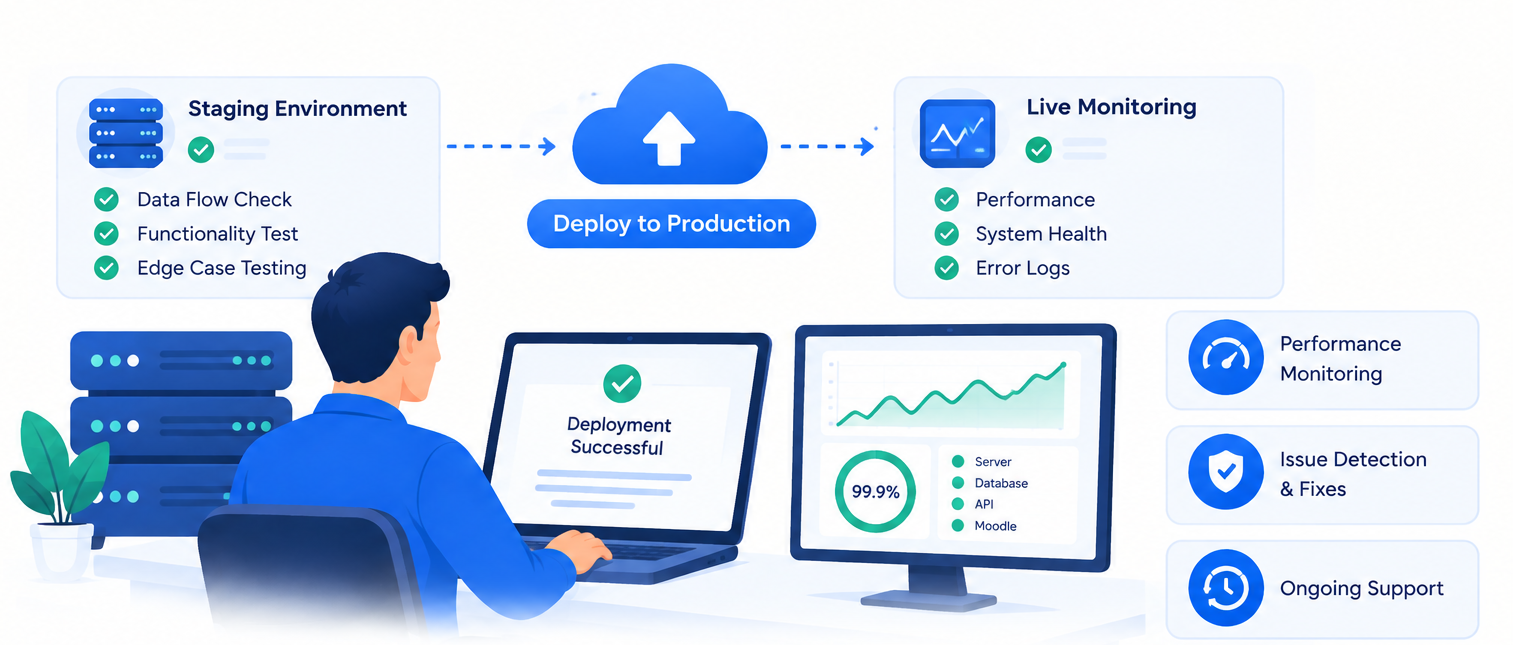
Deployment and Monitoring
05

Deployment & Monitoring

We roll the integration out to production and monitor performance closely afterward, so we catch and fix anything unexpected early rather than after it's caused a problem.

↗

Third-Party Applications and APIs

Beyond the core systems above, there's often a broader need: embedding Moodle into external applications, mobile apps, reporting tools, or a custom-built platform you're already running — or one you're planning to build. The goal is the same either way. Learning and training shouldn't sit in their own separate corner. They should work as part of one connected system, with no seams between the tools your team uses every day.

External applications
Mobile apps
Reporting tools
Custom platforms
Moodle APIs
↔Moodle IntegrationConnected systems and workflows
✓One Connected Learning System

When that's done right, here's what changes:

01

No more manual data entry

02

Real-time synchronization of data

03

Centralized tracking and reporting

04

More automated workflows

05

Better learning and administrative experiences

The takeaway is simple: connect your systems to your platform, and Moodle stops being a separate tool your team has to work around.

If there's a specific tool you rely on that isn't listed anywhere on this page, tell us about it. If it has an API — and most modern tools do — there's a good chance we can connect it. We'll tell you honestly if something isn't feasible, rather than promise it and figure it out later.

Get a Free Integration Assessment →
WHY WORK WITH US

Why Businesses Choose to Work With Us

We'd rather be straightforward about this than list a wall of generic claims.

01

We Specialize in Moodle

We specialize in Moodle, which means we're not spreading our attention across platforms we know less well.

↗
02

Security From the Start

Security and access control are part of how we build from the start, not something we bolt on afterward.

↗
03

Built to Scale

We design integrations to hold up whether you have a few hundred learners or a lot more than that.

↗
04

Clear From the Beginning

We tell you upfront what's realistic — timeline, cost, and risk — instead of letting you find out partway through.

↗
05

We Take Moodle Seriously

We're not going to pretend we're the only team that can do this work. What we can tell you honestly is that Moodle is what we focus on, and we take that seriously.

↗

Industry-Specific Solutions

The following are the industries which we integrate for, that use moodle as their LMS:

Eh vs. Private Enterprises applying training for company education, manpower management automation.

Colleges and universities communicate with their university/college courses.

Institutions, such as those in professional learning and certification.

Kris

Kris Rambeau – Progressive Learning Academy

We have partnered with 2PI Solutions for three years now and value their consistency, technical expertise, and deep understanding of our ecosystem. Their successful integration of our off-grid learning devices with our cloud infrastructure ensured secure, seamless synchronization with our LMS. Their flexibility and reliability make them a trusted long-term partner for scalable, future-ready technology.

Laxmish

Laxmish – IZEN

We have been working closely with 2PI Solutions for five years, and their consistency, technical expertise, and understanding of our ecosystem have been exceptional throughout the engagement. They delivered a reliable solution that ensures seamless, secure synchronization of the device content with our LMS across environments. We value their flexibility, which gives us greater operational control. 2PI Solutions is a trusted, long-term partner we rely on for scalable and future-ready technology.

Brian

Brian Guercio – Tektone

We’ve been using 2PI Solutions for approximately 5 years now to help manage and maintain our LMS. We couldn’t be more pleased with their efforts! Their availability and response time has always been excellent, and their expertise and problem-solving skills are top notch! I look forward to working with them for years to come.

Frequently asked questions

What is LMS integration?

It’s connecting your Learning Management System to other software you use — CRM, HR systems, payment tools — so information updates automatically across all of them instead of being entered by hand in each one separately.


Usually, yes. If it has an API, or supports standards like LTI or SSO, we can typically connect it. We’ll tell you clearly during the discovery conversation if something isn’t realistic, rather than find out halfway through the project.

It depends on what you need. A single integration — SSO or Zoom, for example — might take a few weeks. Connecting several systems together, like CRM, HR, and payments at once, takes longer. We’ll give you a real timeline once we understand your setup, not a generic estimate.


No — Moodle is what we focus on. We’d rather be genuinely good at one platform than average across several.


No, we have taken measures to keep our integrations light so that it doesn’t affect your platform performance but still optimized for performance.

Yes, we factor in security when creating payment gateways and are committed to providing secure encrypted integration that is best industry standard.

Not if it’s done properly, which is why we test under realistic conditions before anything goes live rather than assuming it’ll be fine.

Yes, we allow Zoom, Microsoft Teams and Google Meet etc for virtual class discussion.

Yes, we create all integrations in a way that it is unique to what you do, your process flow and data flow.

Yes, we have a staging site for testing and will test all integrations extensively before deploying to any production environment.

Yes, support for ALL integrations is something that we offer ongoing.